
Top 15 Val Kilmer Movies, Ranked
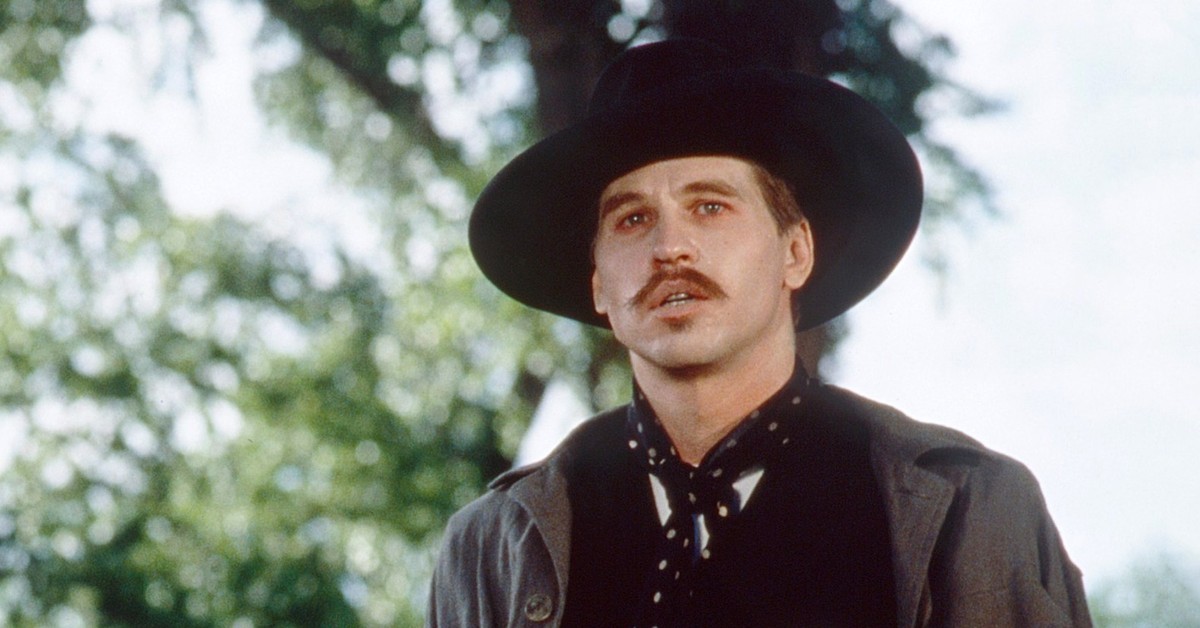
There’s a moment in Tombstone where Val Kilmer’s Doc Holliday looks up from a poker table, pale and half-dead, and says “I’m your huckleberry” with a smile that makes your spine tingle. That one line reading tells you everything you need to know about what made Kilmer special: an actor who could make a single moment feel like it belonged to him forever. At TV Hulk, we ranked these performances based on how completely he disappeared into each role and how long those performances stayed with us after the credits rolled. From cult favorites to blockbuster icons, this is the full picture of a wildly underrated career.
15. MacGruber (2010)
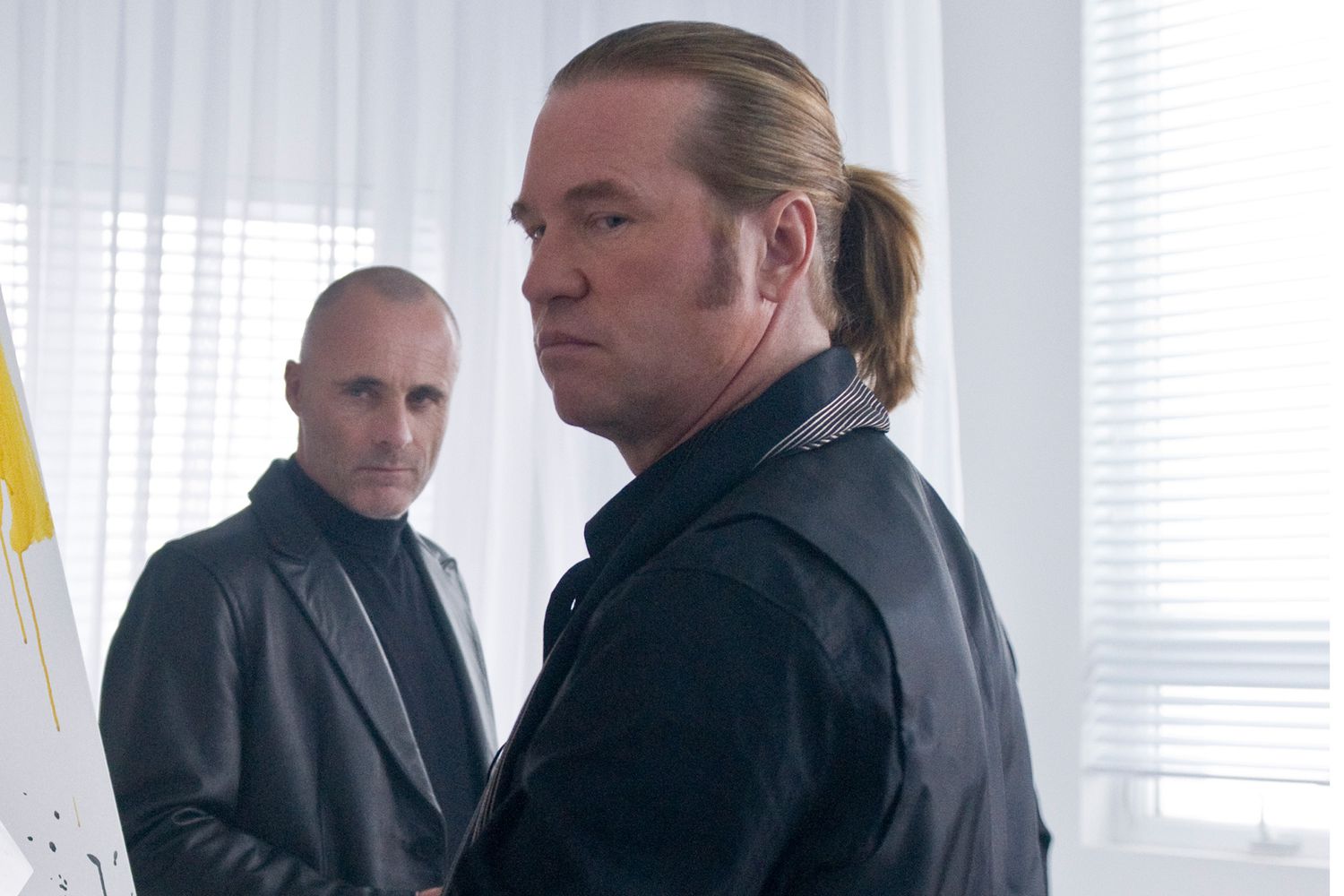
Dieter, the villain, is not a subtle character. The name alone tells you what kind of movie this is, and Kilmer leans into the absurdity with a completely straight face, which is precisely why it works. While Will Forte’s MacGruber is busy being spectacularly incompetent, Kilmer plays the villain with the same gravitas he’d bring to a serious thriller, never once winking at the camera or acknowledging the joke. That commitment to playing it real inside a deeply silly movie is what elevates his scenes above the average SNL-spinoff chaos. The film flopped theatrically but has since built a passionate cult following, and Kilmer’s willingness to be this ridiculous, this earnestly, is a genuine delight throughout.
14. Real Genius (1985)
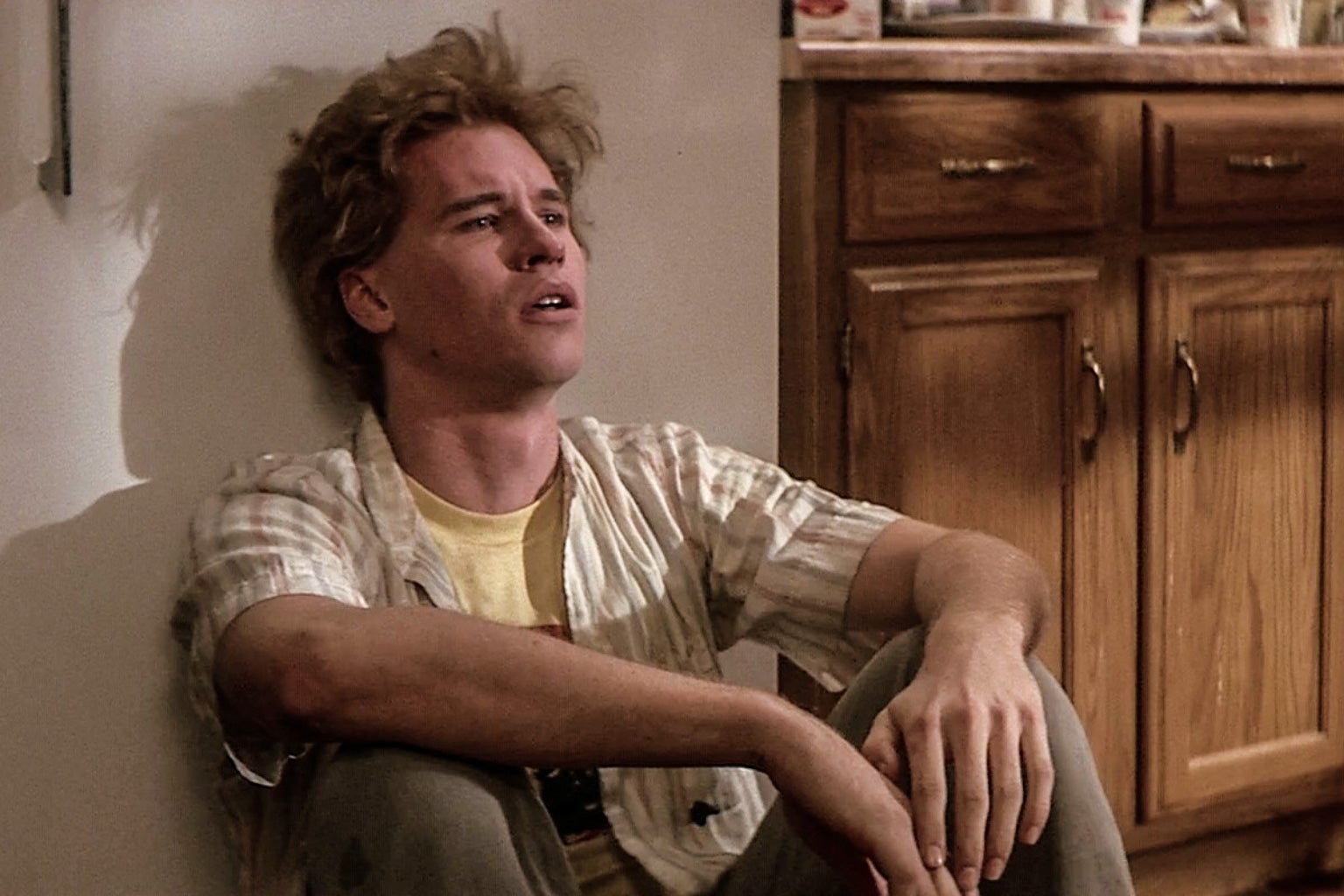
Chris Knight arrives on screen already mid-prank, mid-quip, mid-everything, and Kilmer never lets up for the entire runtime. His fast-talking, laser-focused prankster showed audiences early on that he had genuine comic timing baked into his DNA, the kind of effortless charisma that can’t be manufactured. The deadpan delivery of lines like “It’s a moral imperative” became a rallying cry for a generation of nerdy kids who saw themselves in the film’s celebration of brains and irreverence. There’s a lightness to his performance here that he wouldn’t always get the chance to revisit. Watching it now, you can see the full range of what he was capable of before Hollywood started casting him almost exclusively as cool and dangerous.
13. Spartan (2004)
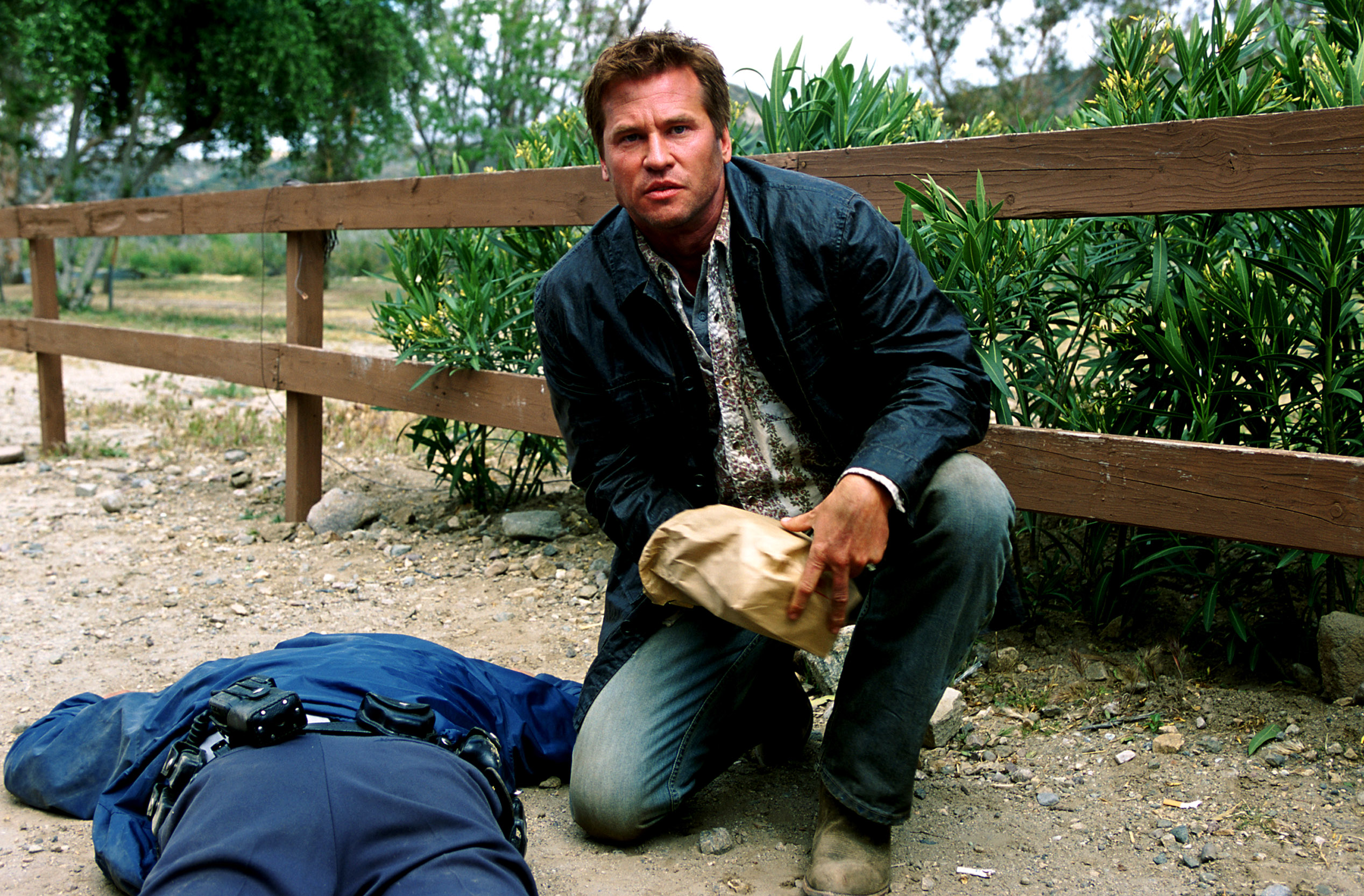
Robert Scott doesn’t explain himself. He doesn’t emote, doesn’t grandstand, doesn’t give speeches. Kilmer strips away every trace of movie-star vanity to play David Mamet’s special-ops operative as a man defined entirely by function, someone who processes the world through mission parameters rather than feelings. The clipped, rhythmic Mamet dialogue could easily sound robotic in the wrong hands, but Kilmer finds the humanity underneath the economy of words. That comes through most clearly in a late scene where Scott realizes the full scope of what he’s been used for and processes it with nothing more than a long, still pause. It’s a genuinely disciplined piece of work that most audiences missed entirely.
12. Thunderheart (1992)
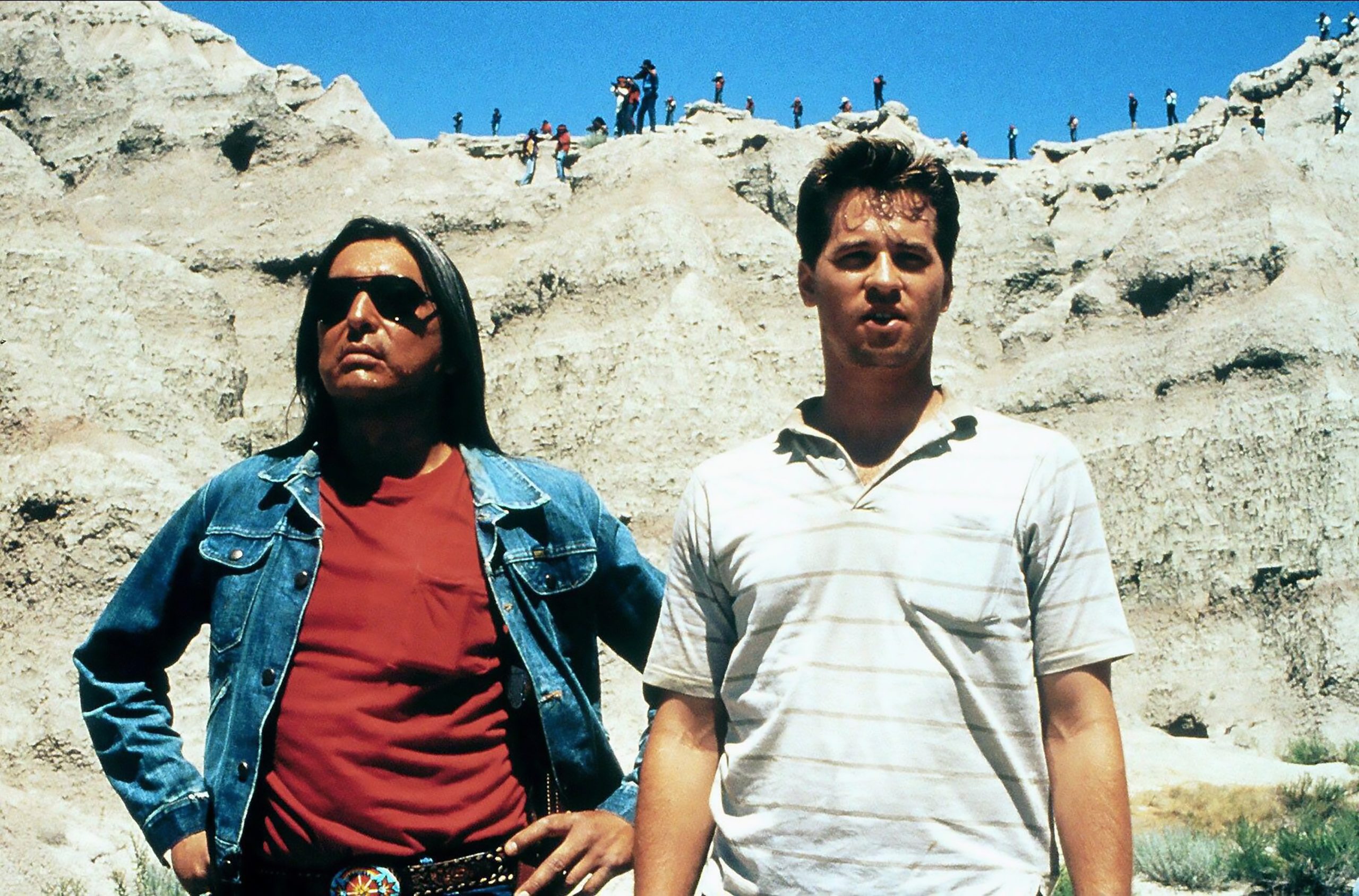
Ray Levoi spends most of this film trying not to be who he is. Kilmer plays the conflicted FBI agent, a man of Sioux descent assigned to investigate a murder on a reservation he has no emotional connection to, with a slow-burning internal tension that gradually cracks open as the case forces him to reckon with an identity he’s spent his whole life suppressing. There’s a scene where he stands at a sacred site and something shifts behind his eyes, a quiet recognition that Kilmer conveys without a word of dialogue. It’s a thoughtful, grounded lead performance in a film that handles its political subject matter with more care than most, and it remains one of his most underappreciated roles for fans willing to seek it out.
11. The Salton Sea (2002)
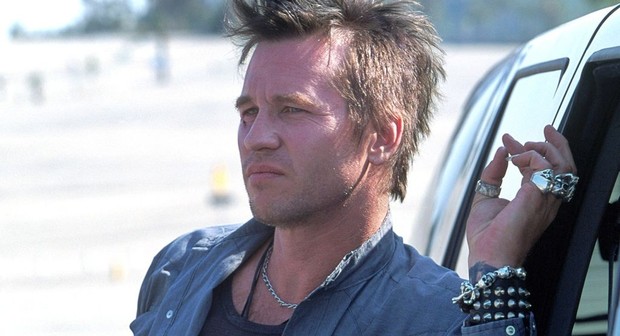
Danny Parker is living two lives simultaneously, and Kilmer carries the weight of both into every scene. His grief-destroyed undercover operative, buried deep in the meth underground while nursing a trauma he can barely look at directly, is raw and unpredictable in ways that keep you slightly off-balance throughout the film. The opening narration, delivered with a weary, fractured quality that sets the tone immediately, signals that this isn’t going to be a slick crime movie. It’s a character study about a man falling apart in slow motion. The film’s cult following has long recognized this as one of his most committed lead performances, a gritty, go-for-broke piece of work that deserved a much wider audience than it found on release.
10. True Romance (1993)
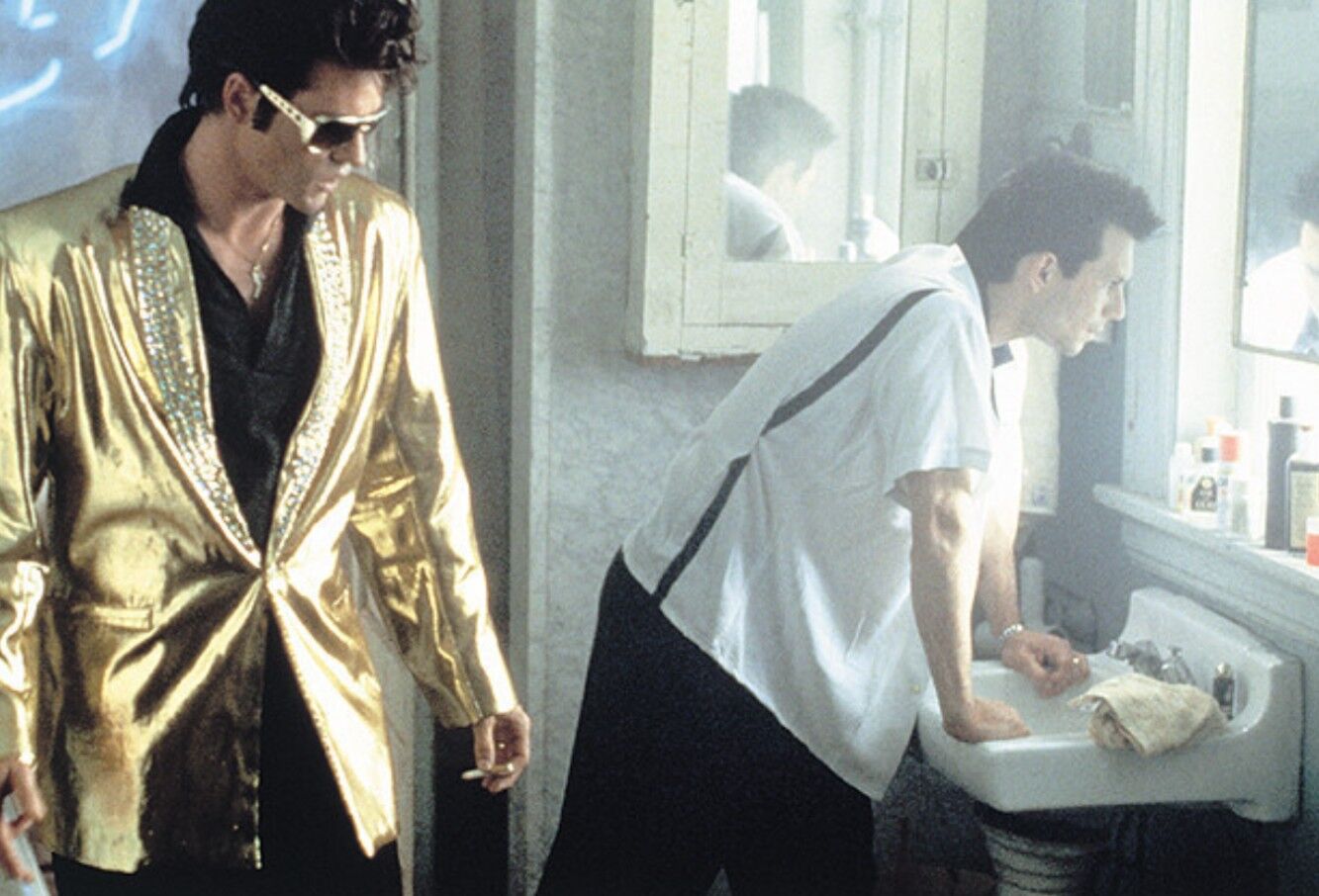
Kilmer is on screen for maybe five minutes total, appearing as an Elvis-like spirit guide who visits Clarence in a bathroom mirror and essentially sets the entire film’s mythology in motion. What’s remarkable is how much weight those few scenes carry. He doesn’t play Elvis as an impression or a costume; he plays him as a genuine supernatural presence, warm and slightly dangerous at the same time, like a guardian angel who’s seen too much. In a film absolutely packed with scene-stealing performances from actors with far more screen time, his ghost-Elvis somehow registers as essential rather than decorative. It’s a brief appearance that only an actor of real gifts could make feel like it belonged to the movie’s soul.
9. Willow (1988)
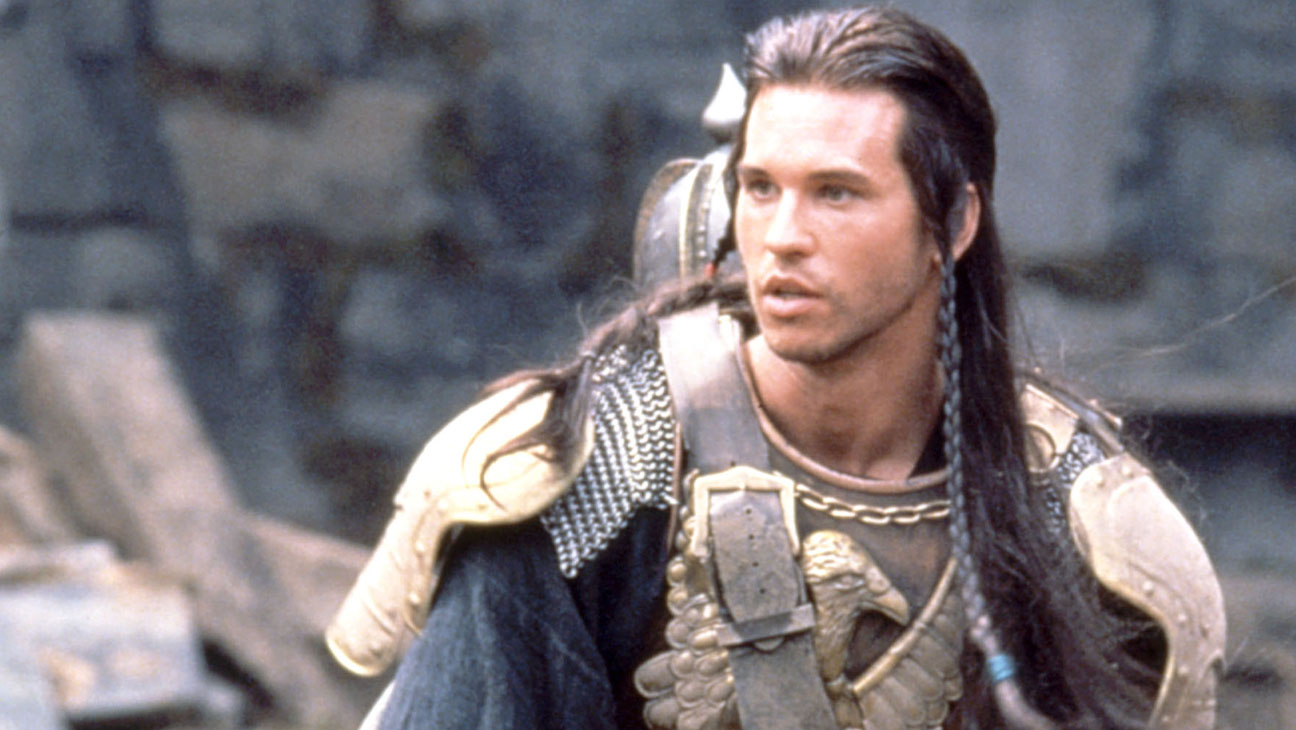
Madmartigan shows up in a cage, imprisoned and loudly negotiating his own release, and from that first moment Kilmer owns every frame he’s in. His roguish, swaggering mercenary is the beating heart of this fantasy adventure from the world of George Lucas, funny and fearless and unexpectedly charming in a way that turned the character into a fan favorite still celebrated by ’80s fantasy lovers decades later. The romance subplot, which could easily have felt tacked on, works entirely because of the chemistry Kilmer generates with Joanne Whalley. It’s most obvious in the scenes where Madmartigan’s bravado keeps slipping to reveal something more genuine underneath. Pure movie-star magnetism from an actor at his most effortlessly watchable.
8. The Prince of Egypt (1998)
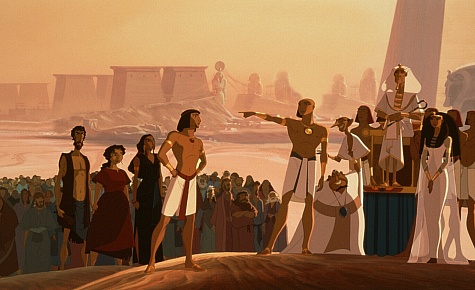
Voicing both Moses and the voice of God in the same film is a casting choice that could have been a gimmick, but in Kilmer’s hands it feels inevitable. As Moses, he brings a searching, uncertain quality to the early scenes that gradually hardens into conviction, tracking the character’s transformation through subtle shifts in vocal weight and rhythm. The burning bush sequence, where his Moses voice and his God voice essentially hold a conversation, is handled with a quiet reverence that gives the scene genuine spiritual texture. DreamWorks’ acclaimed animated epic found a massive audience, and the warmth and gravity Kilmer brings to both roles is central to why the film still resonates with audiences who grew up with it.
7. Batman Forever (1995)
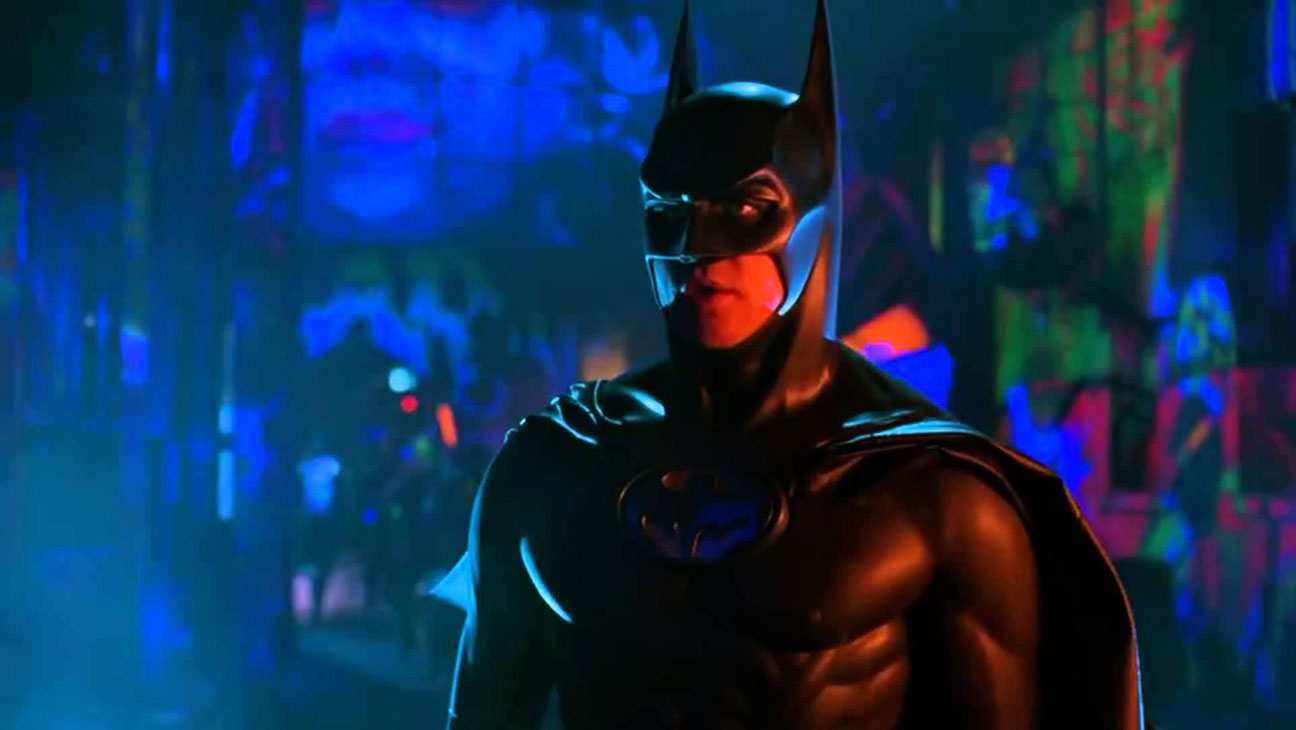
Bruce Wayne’s first scene tells you exactly what Kilmer is doing with the role: he plays Wayne not as a billionaire playboy but as someone quietly haunted, wearing his own public persona like a costume he’s not comfortable in. That introspection got swallowed by Joel Schumacher’s neon-soaked spectacle, but it surfaces in the therapy scenes with Nicole Kidman, where something unmistakably wounded comes through. His Batman is less theatrical than what came before and less operatic than what came after, which made it feel slightly out of place at the time but reads as more interesting in retrospect. The film became the second-highest-grossing release of 1995 in the U.S. and cemented him as a genuine A-list leading man, even if the franchise moved on without him.
6. Kiss Kiss Bang Bang (2005)
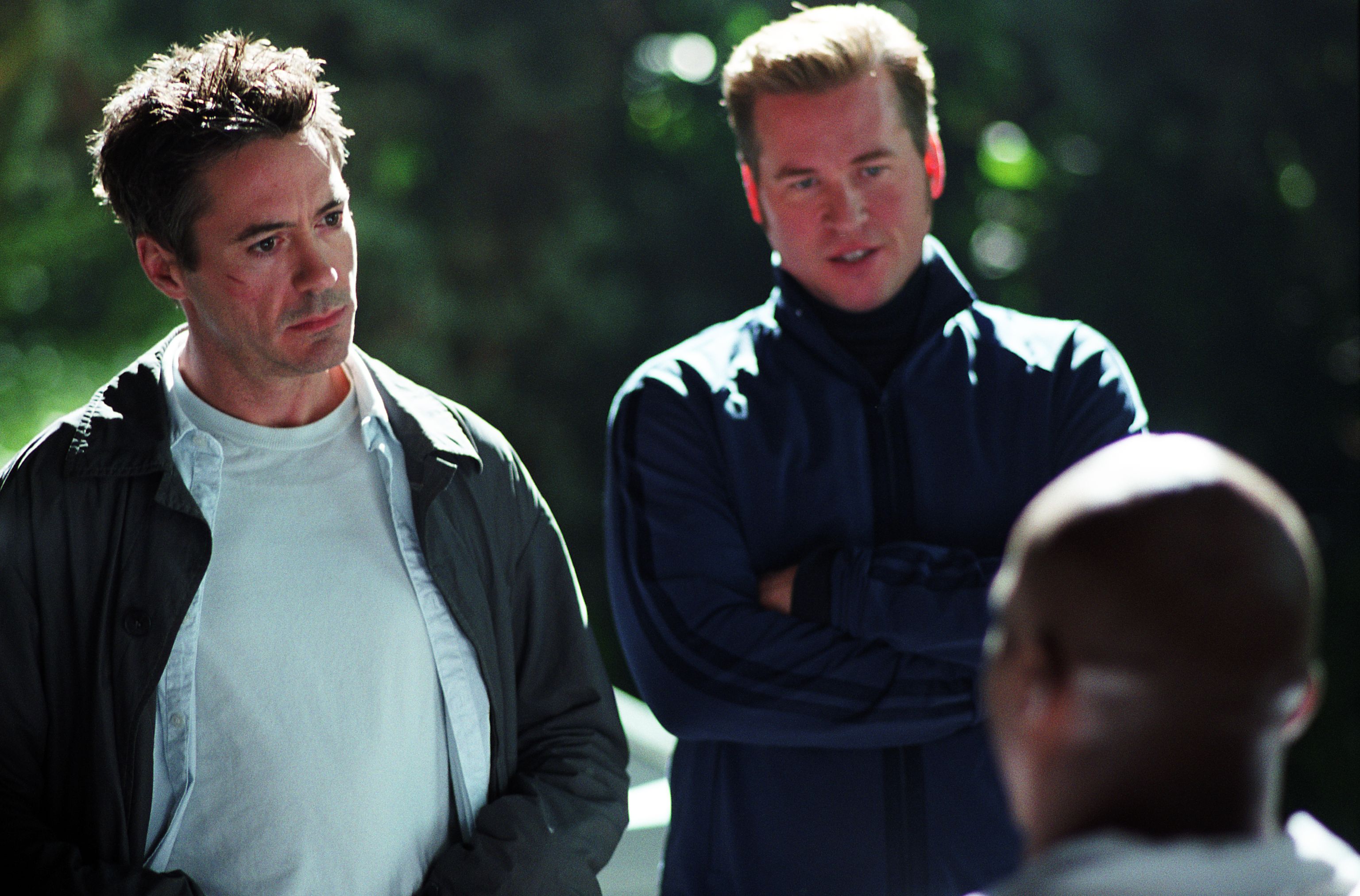
Gay Perry van Shrike has seen everything, is impressed by nothing, and has absolutely no patience for incompetence. Kilmer plays Shane Black’s razor-sharp private detective with a fast, dry wit that lands every line reading like a perfectly timed jab, and his chemistry with Robert Downey Jr. is so natural and combative that their scenes together feel like they could go on twice as long without losing any energy. The moment where Perry violently makes a point to Harry and then immediately moves on as if nothing happened is peak Kilmer: funny, slightly terrifying, and completely committed. He took home the Satellite Award for his work here, and the film’s cult following has grown considerably louder in the years since its initial release.
5. Heat (1995)
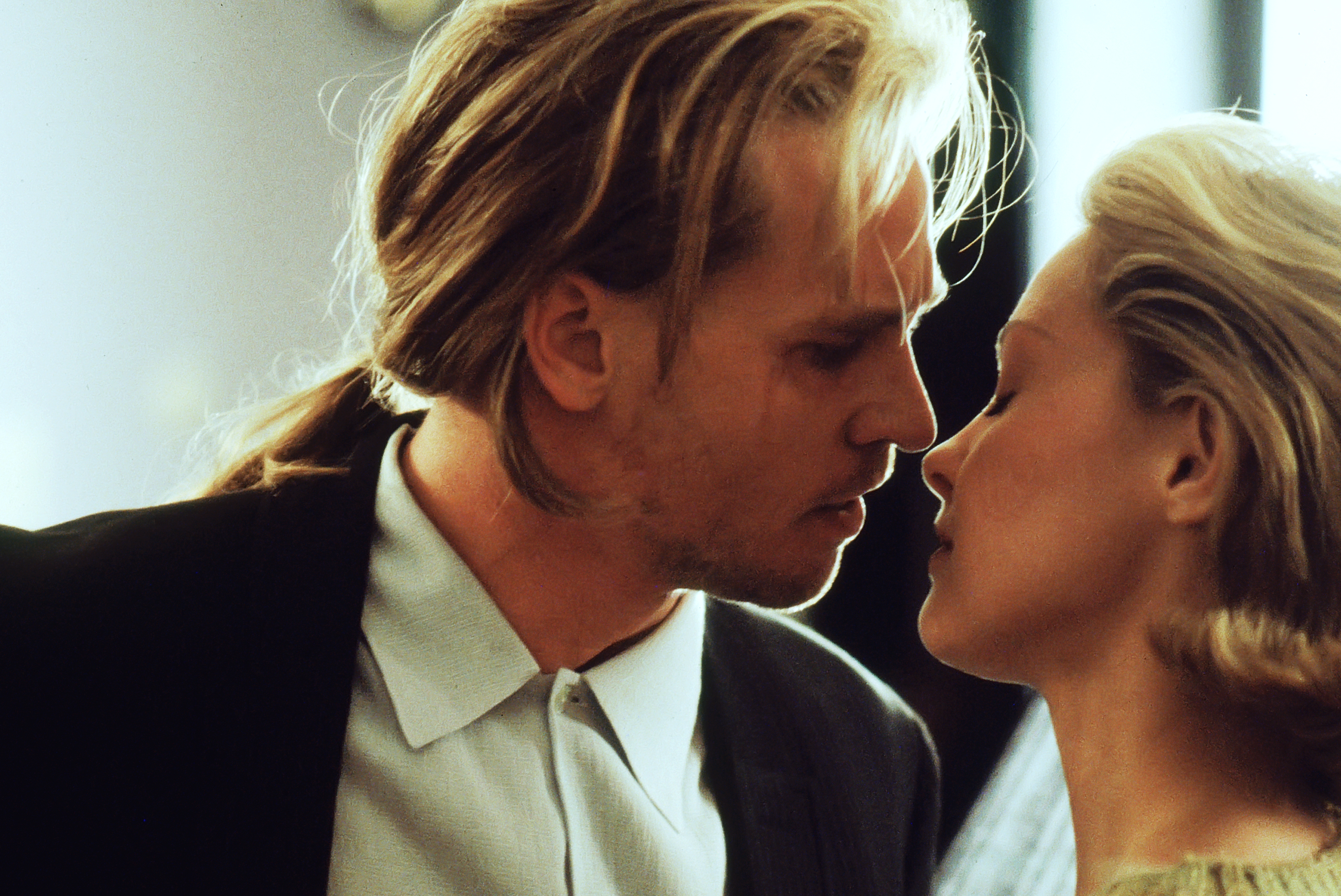
Chris Shiherlis is the crew’s live wire, the one most likely to blow the whole operation because he can’t keep his personal life from bleeding into his professional one. Kilmer plays him with a barely contained volatility that charges every scene with a slight danger, and his final desperate sprint through the streets of Los Angeles, wounded and running out of options, is one of the tensest sequences in Michael Mann’s crime epic. What’s impressive is how much presence he generates while sharing the screen with Robert De Niro and Al Pacino, an ensemble that could easily have pushed a lesser actor into the background. Shiherlis never disappears; he burns.
4. Top Gun: Maverick (2022)
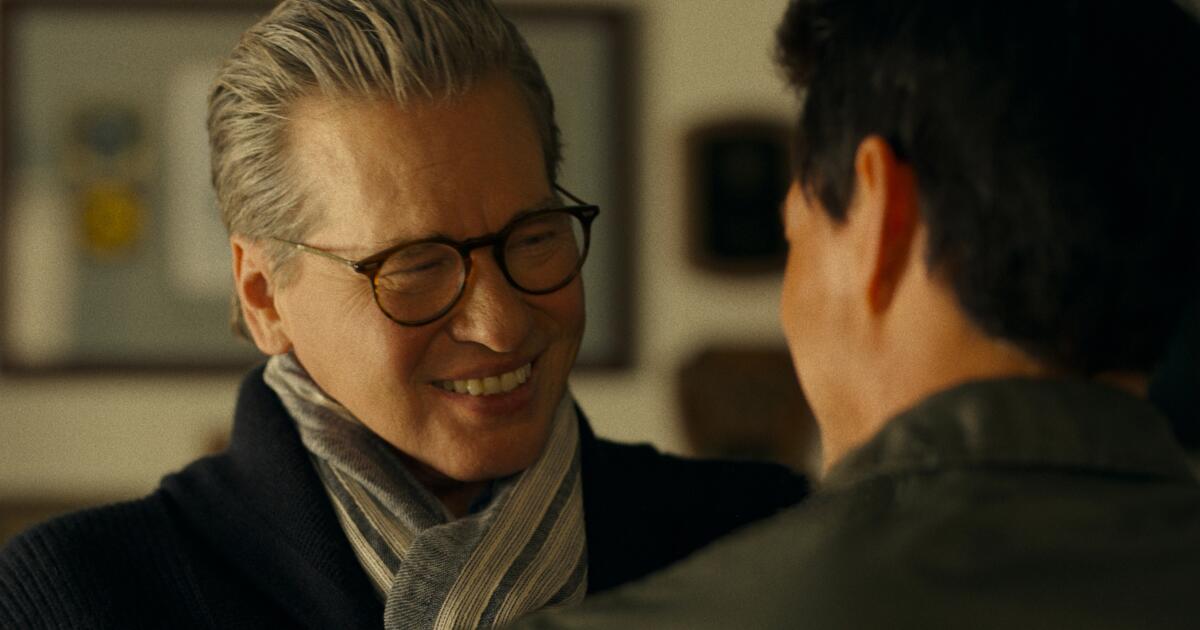
Admiral Kazansky communicates almost entirely through a tablet screen, his voice reduced to a synthesized rasp by the throat cancer that Kilmer himself had been battling in real life. And yet the scene between Iceman and Maverick in that hospital room is the emotional center of a blockbuster, with audiences openly weeping at something that blurred the line between a movie reunion and a genuine human moment. Kilmer doesn’t need dialogue to make it land; the look in his eyes when he reaches out to touch Maverick’s face does everything. It’s a performance that required almost no screen time to become the most talked-about moment in the film, and the fact that it hits as hard as it does is entirely down to what he brings to those few minutes.
3. Top Gun (1986)
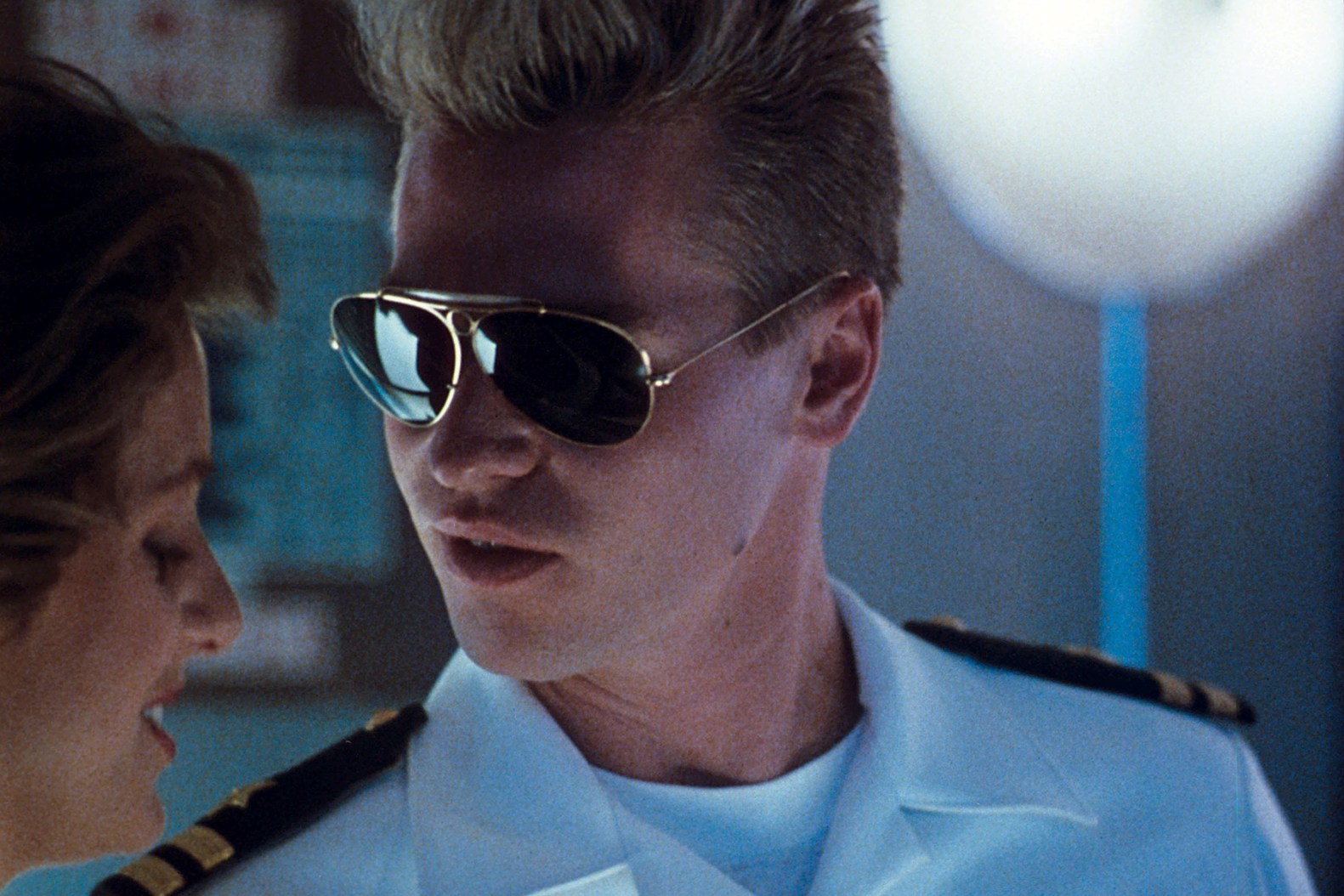
In a movie full of guys competing to be the coolest person in the room, Iceman wins without breaking a sweat. Kilmer’s perfectly groomed, jaw-clenching rival to Maverick became a pop culture shorthand for a specific kind of intimidation: the person who doesn’t need to raise their voice because their contempt is already doing all the work. The locker room confrontation, where Iceman bites the air and tells Maverick that he’s dangerous, is a thirty-second piece of physical acting that people have been imitating for nearly forty years. This is the role that launched Kilmer into the stratosphere, and the fact that he managed to make the antagonist more magnetic than the hero in a film built entirely around Tom Cruise says everything about the instincts he brought to the part.
2. The Doors (1991)
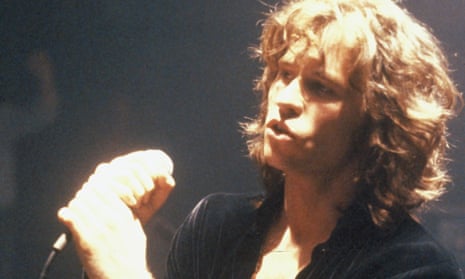
Jim Morrison is one of the most difficult roles in rock biopic history, a figure so mythologized that any performance risks becoming hagiography or caricature. Kilmer avoided both by doing something almost unprecedented: he learned to sing, learned guitar, and worked so deeply on Morrison’s voice and physical mannerisms that the surviving Doors members reportedly couldn’t distinguish his recordings from the originals. Watch him perform “Light My Fire” on The Ed Sullivan Show and try to find the seam between actor and subject. It’s not there. The transformation is total, from the way he holds the microphone to the way Morrison’s charisma and self-destruction existed in the same breath. It remains the most committed rock performance ever put on screen, a full-body, full-soul immersion that never once feels like an impression.
1. Tombstone (1993)
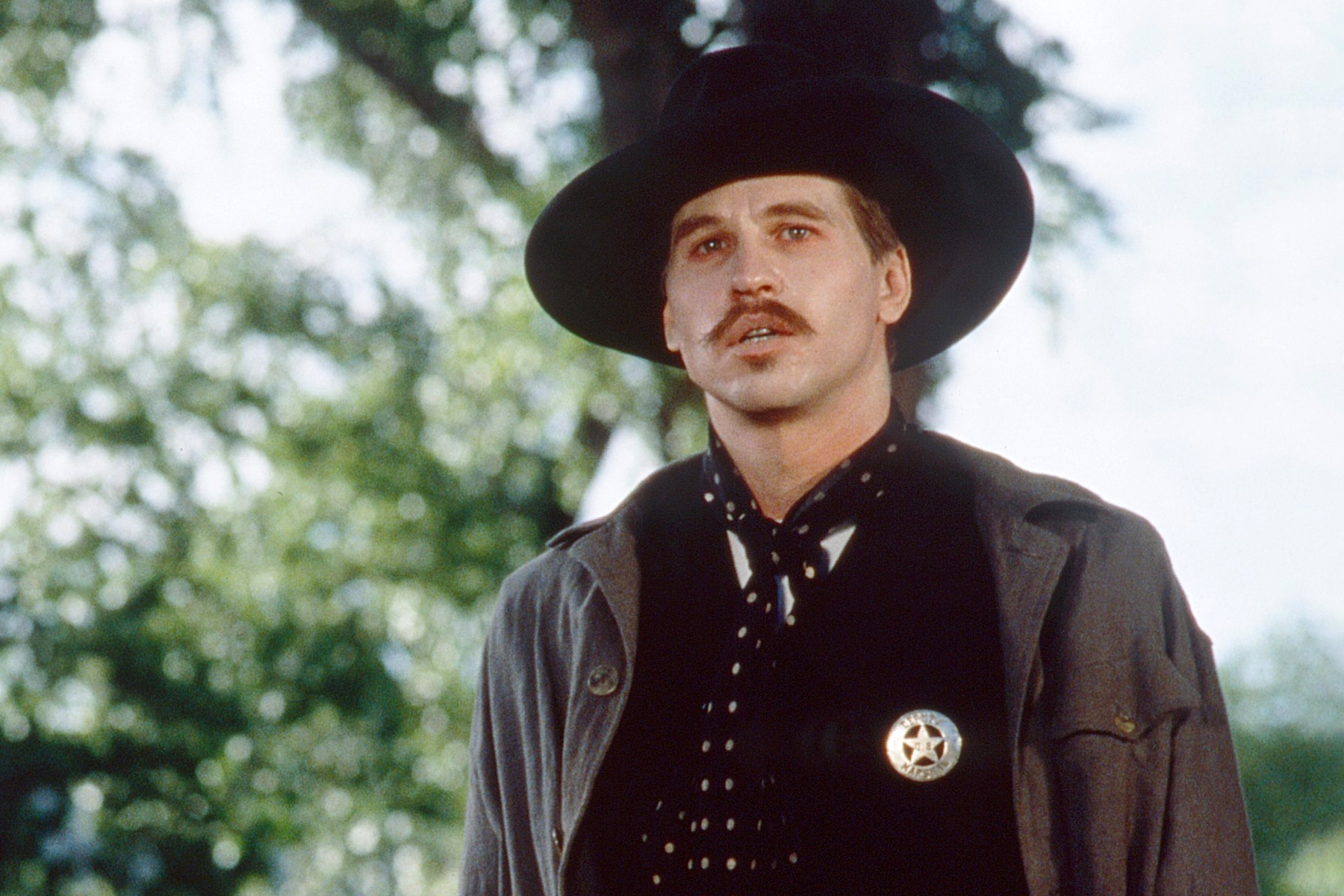
Doc Holliday is dying for the entire film, and Kilmer plays that fact as both tragedy and liberation. His Doc moves through every scene with the loose, dangerous grace of a man who has made his peace with death, making him simultaneously the funniest and most terrifying person in any room. “I’m your huckleberry,” delivered from a reclining chair with a smile containing about six emotions at once, became one of the most quoted lines in Western history, not because it’s great on paper but because of exactly what Kilmer does with it. The dying bed scene, where Doc finally lets the performance drop and something unexpectedly tender surfaces, hits like a gut punch after two hours of watching him be magnificent. It’s a supporting turn that completely overshadows the film’s lead, and decades later it’s still the first thing people mention when Kilmer’s name comes up. The character belongs to him in a way few actors ever truly own a role.
Val Kilmer’s career is a fascinating study in an actor who was often more interesting than the films around him, someone who could steal a blockbuster with a jaw clench and disappear completely into a rock legend in the same decade. He voiced a generation’s childhood in The Prince of Egypt, but his legacy lives in the performances where he committed so fully that you forgot you were watching an actor at all.

Written by Miranda Davies
Film & TV Enthusiast
Hi, my name is Miranda Davies, and I’ve loved film and television all of my life. Some of my earliest memories involve me and family or friends catching the latest movies, or reclining on the couch to catch some awesome television, and I want to share that passion with fellow fans like you! The best way to celebrate film and television is to chat about it with people as equally passionate as you, so this website will be dedicated to being a hub for those that want to chat about their obsessions in a safe and welcoming environment that is fun to visit!
More about the author