
Top 13 David Harbour Movies, Ranked
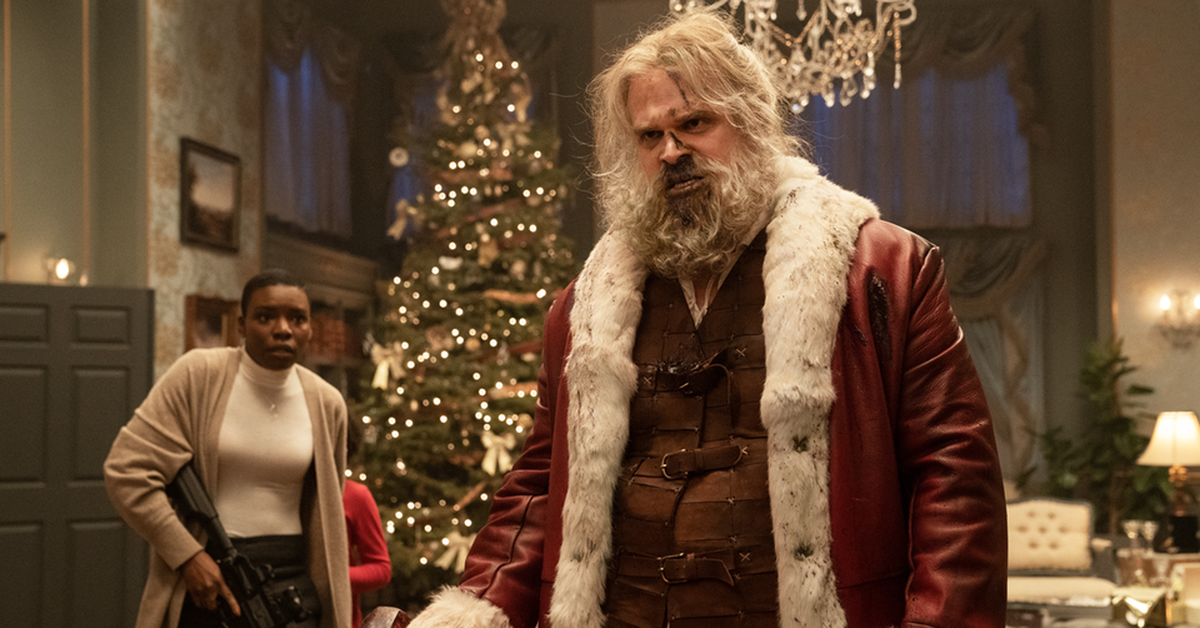
There’s a specific kind of actor who spends a decade doing everything right in roles nobody quite notices, then suddenly the world catches up all at once. David Harbour is that actor. From prestige dramas to MCU blockbusters to a genuinely unhinged Christmas movie, his film work rewards closer attention than it usually gets. At TV Hulk, we ranked these performances by how much Harbour himself pulls you in: the moments where you forget you’re watching someone act, the characters who stick with you after the credits roll, and the scenes where he’s clearly the most interesting thing on screen.
13. Kinsey (2004)
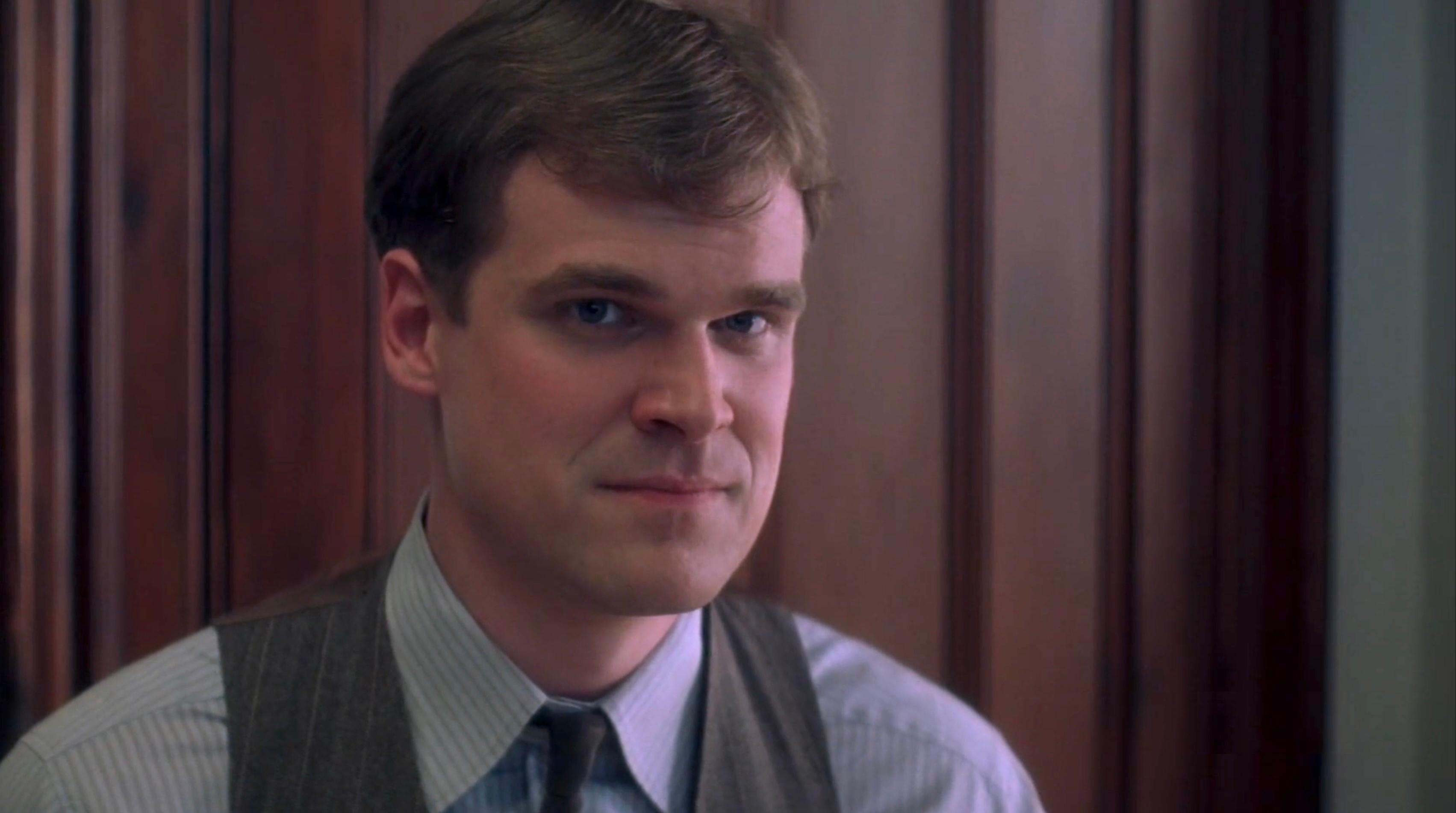
Robert Kinsey is a small role in a big film, and that’s exactly the context you need to appreciate what Harbour does with it. As Alfred Kinsey’s son in Bill Condon’s acclaimed biopic, he’s working alongside Liam Neeson in a serious piece of American cinema, and he carries himself with the kind of quiet credibility that serious directors remember. There’s a particular stillness to his scenes that suggests someone who understood, even this early, that restraint reads better on camera than effort. It’s a minor credit by any measure, but it sticks with you — watch how he holds a reaction just a beat longer than expected, letting the scene breathe around him rather than pushing into it, which tells you his instincts were already pointed in exactly the right direction.
12. State of Play (2009)
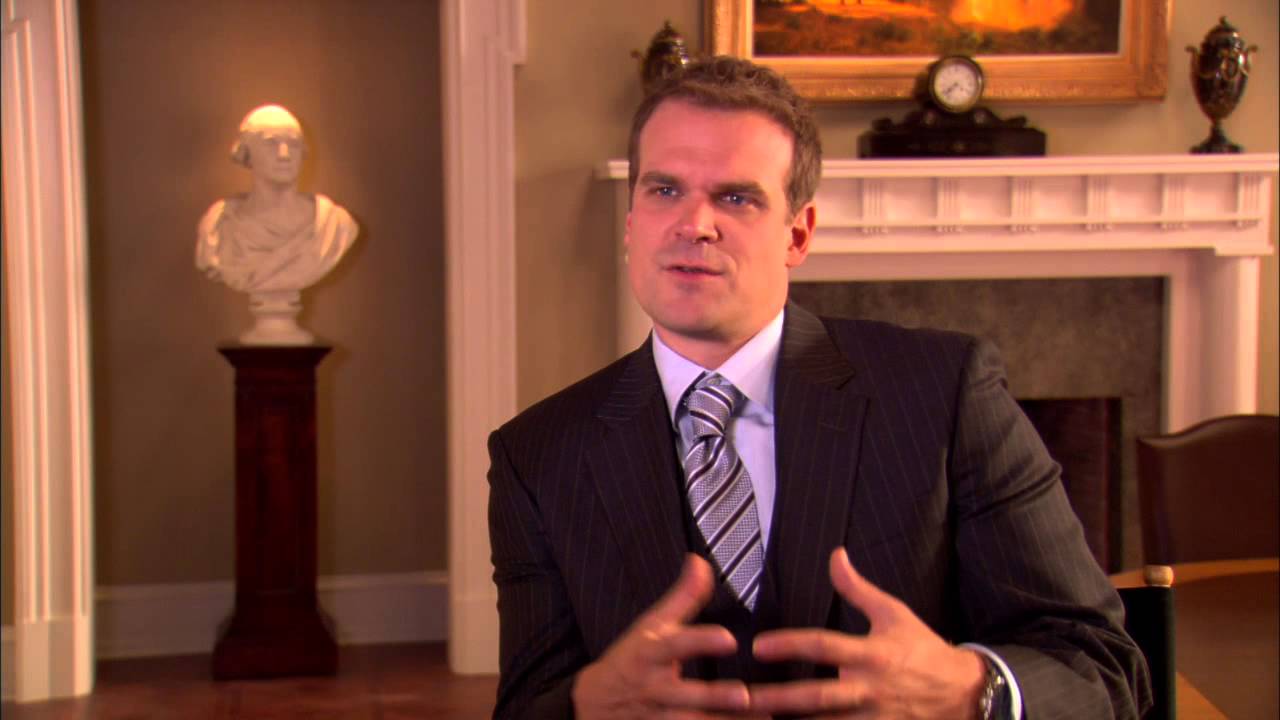
Most Harbour fans have no idea he’s in this one, which is reason enough to track it down. He appears briefly alongside Russell Crowe and Ben Affleck in Kevin Macdonald’s sharp political thriller, a smart, well-crafted piece of journalism-as-thriller storytelling that holds up. His scene carries real tension: a man passing dangerous information while clearly terrified of the consequences, and Harbour plays that fear with a nervous, clipped energy that makes the moment feel credible. It’s a blink-and-you’ll-miss-it appearance, but watch how he keeps his eyes moving even when he’s standing still — that restless, cornered quality is doing more work than most actors manage with ten times the screen time.
11. Hellboy (2019)
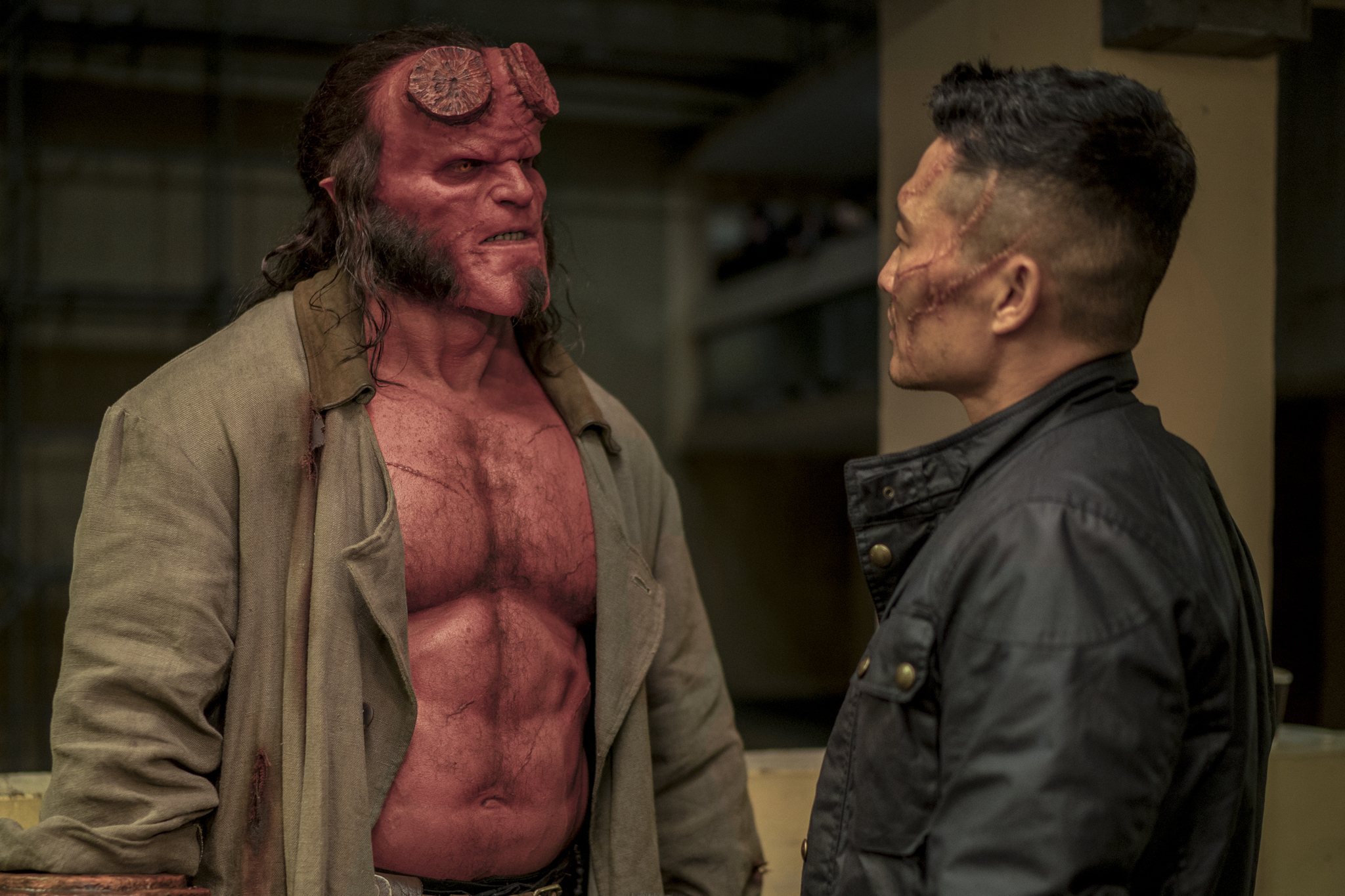
The story of this film is messier than any single performance, but Harbour’s commitment to the role deserves more credit than it received. Under layers of prosthetics, he finds something that lands with real emotional weight in the demon hero: a creature who resents what he is, who carries centuries of self-loathing behind those filed-down horns, and who can’t quite decide if he wants to save humanity or just be left alone. There’s a scene early in the film where Hellboy sits alone after a mission gone wrong, and Harbour plays the exhaustion and alienation through his posture and his eyes in a way that briefly suggests what this movie could have been. The script and tonal chaos around him were the real problems. He swung hard for a character that deserved a better film.
10. Extraction (2020)
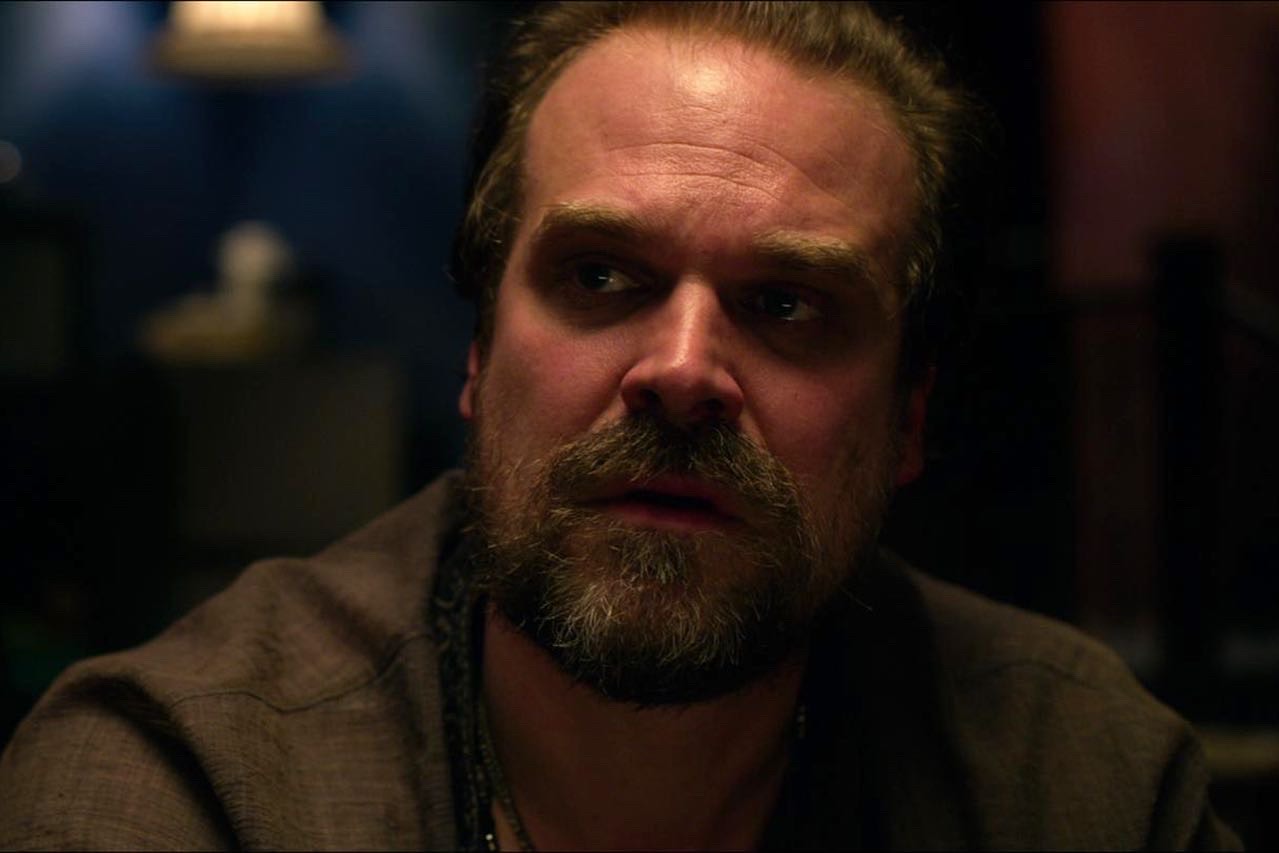
Gaspar arrives in Sam Hargrave’s Netflix action thriller like a complication nobody asked for, and that’s precisely what makes him interesting. Harbour plays the mercenary with a loose, almost casual menace, someone who seems friendly right up until the moment he isn’t, and the scenes where he and Chris Hemsworth circle each other with competing agendas give the film its most dramatically charged stretch. When Gaspar’s loyalties finally crystallize, Harbour sells the pivot without telegraphing it too early. It’s a supporting role in a film that hundreds of millions of people have watched, which means more people have seen this performance than most of the entries higher on this list, even if they couldn’t necessarily name the actor playing it.
9. No Sudden Move (2021)
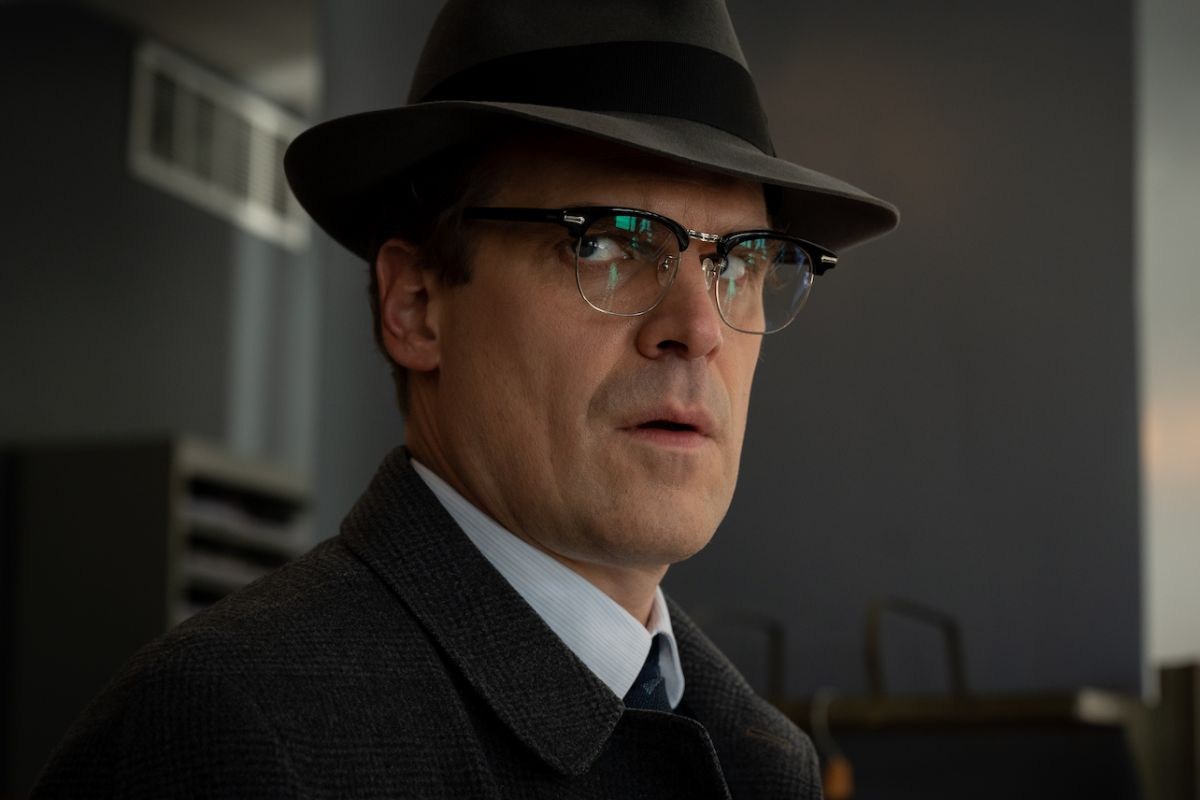
Matt Wertz is not a criminal. He’s a mid-level auto industry functionary who makes one catastrophically bad decision, and Harbour plays every subsequent minute of Steven Soderbergh’s 1950s Detroit crime thriller as a man visibly sweating through his own worst nightmare. There’s a scene where Wertz is trying to explain himself to people who have absolutely no patience for explanations, and the way Harbour physically shrinks while still trying to project authority is both funny and deeply pathetic at the same time. Soderbergh’s film is one of the more underappreciated crime pictures of recent years, dense with plot and packed with a stellar cast, and Harbour fits the register perfectly: ordinary, desperate, and in way over his head.
8. The Equalizer (2014)
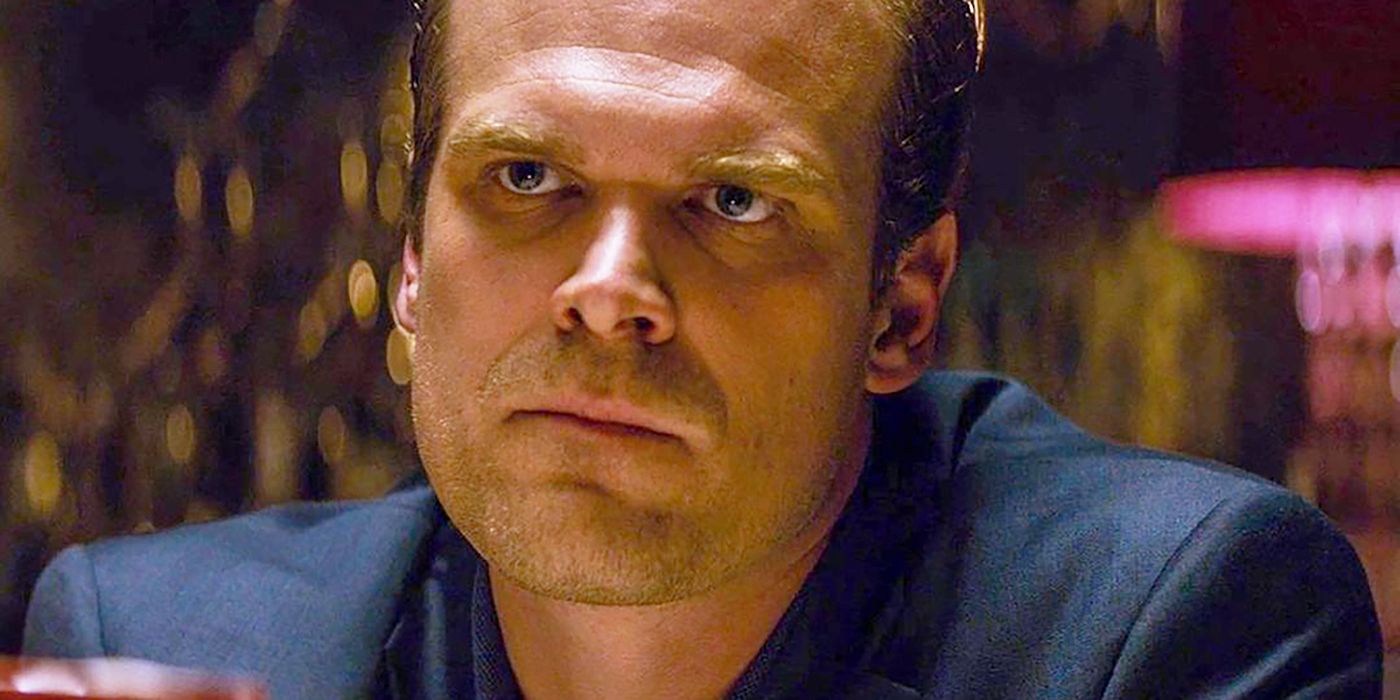
Detective Masters exists in this Antoine Fuqua thriller to remind you why Denzel Washington’s Robert McCall does what he does. Harbour plays the corrupt cop with a particular brand of institutional smugness: the kind of authority figure who has been getting away with things for so long that he’s stopped pretending to be anything else. The film launched a franchise and performed strongly at the box office, and while Masters isn’t a large role, Harbour’s slimy conviction in the part gave him one of his most commercially visible credits before Stranger Things changed everything. When Masters and McCall finally share scenes, Harbour ensures the power imbalance registers before Denzel starts dismantling it. He makes you want the comeuppance, which is the whole job.
7. Quantum of Solace (2008)
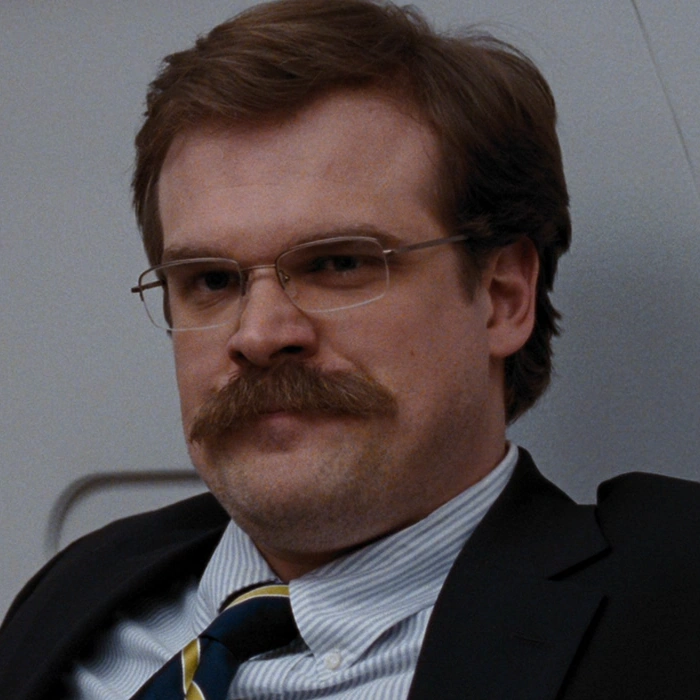
Gregg Beam is the face of American foreign policy at its most cynical, and Harbour plays him with a smooth, boardroom-ready amorality that fits right into the Bond universe’s gallery of institutional villains. The CIA operative doesn’t get a lot of screen time in Marc Forster’s sequel, but Harbour uses what he has efficiently: a man who has rationalized every compromise he’s ever made and can’t begin to see why that should be a problem. There’s a briefing scene where Beam essentially explains to Bond that the ends justify the means, and Harbour delivers it with such practiced ease that the character’s corruption feels almost banal — no raised voice, no flicker of doubt, just a guy who genuinely believes he’s one of the reasonable ones.
6. End of Watch (2012)
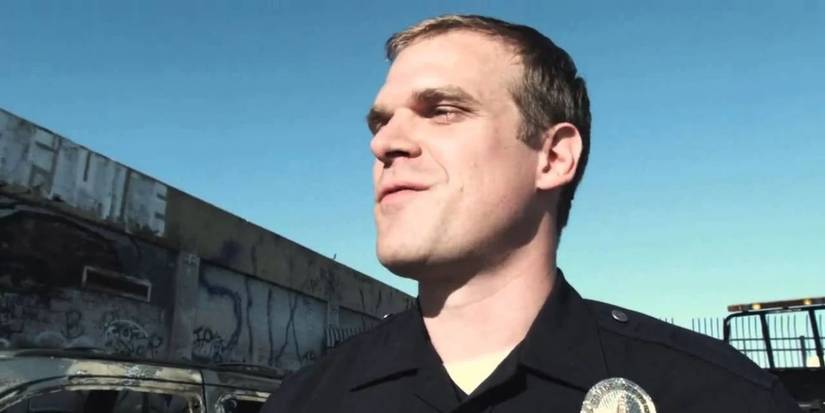
Officer Van Hauser operates on the edges of David Ayer’s raw, found-footage LAPD drama, and Harbour brings a deeply unsettling quality to those edges. Where Jake Gyllenhaal and Michael Peña play brotherhood and warmth, Van Hauser represents something colder: the veteran cop who has been on the job long enough to stop caring about the right things. There’s a locker room scene where Harbour’s casual contempt for the younger officers lands with a quiet menace that briefly shifts the film’s tone. End of Watch is among the more viscerally effective cop films of that decade, praised for its authenticity and emotional gut-punch of a finale, and Harbour’s supporting presence is part of what makes the world feel real and a little dangerous.
5. Brokeback Mountain (2005)
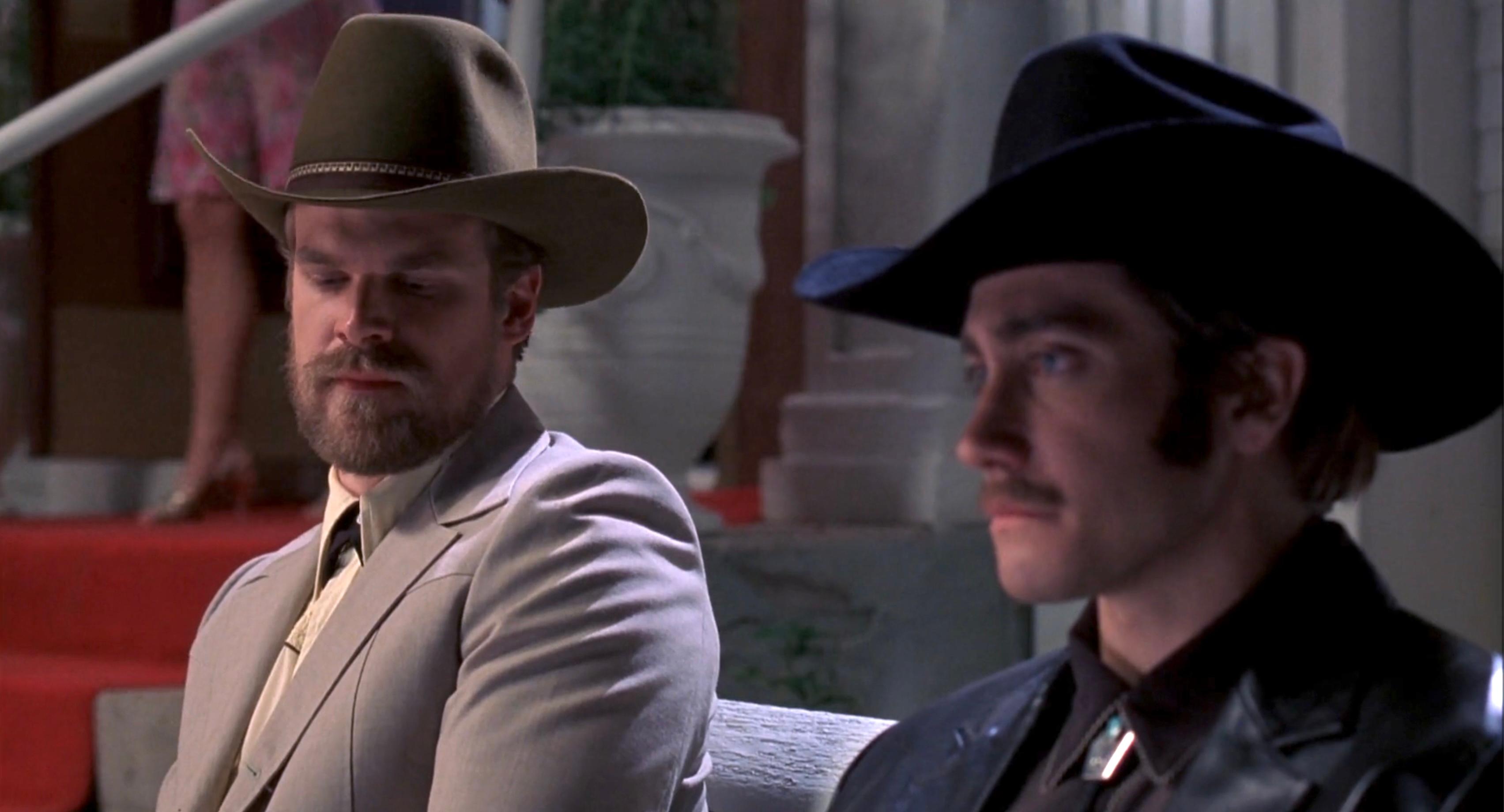
Randall Malone appears in one of the most culturally significant American films of the 2000s, and Harbour’s presence in Ang Lee’s landmark drama is absolutely worth acknowledging. The film permanently shifted how mainstream cinema engaged with queer stories, and Harbour is part of that fabric, playing a supporting figure in the rodeo world surrounding Ennis and Jack’s relationship. In the bar scene where the rodeo crowd closes ranks, watch how Harbour plants his feet wide and lets his arms hang loose at his sides — not aggressive exactly, just immovable, like a door that’s decided it won’t open. He never raises his voice or makes a speech; that deliberate physical stillness does the work of communicating exactly how that world enforces its own silence.
4. Gran Turismo (2023)
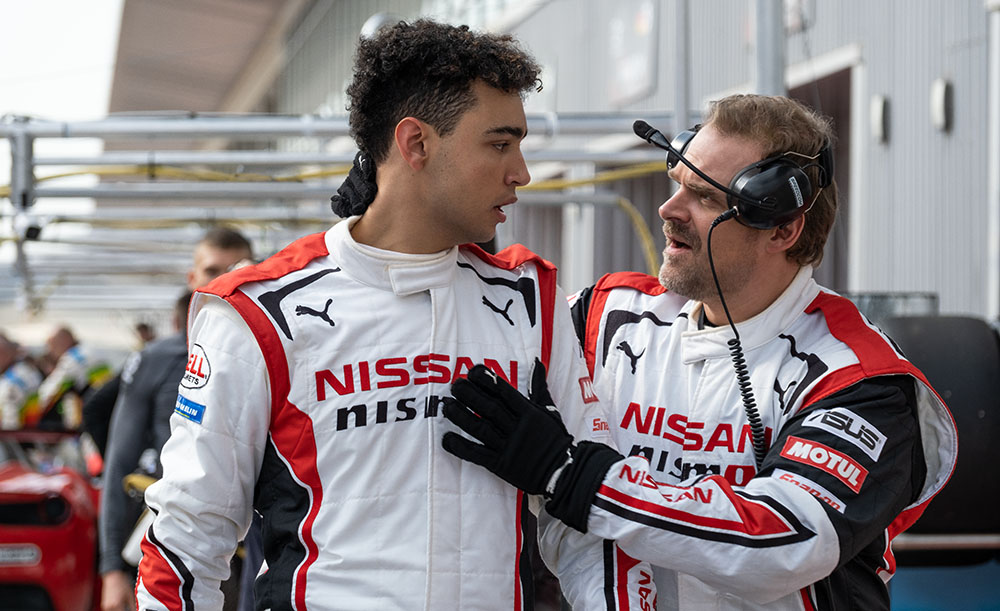
Jack Salter is the kind of mentor role that usually exists to deliver inspirational speeches at the right moments, and Harbour makes sure that never happens. Neill Blomkamp’s film follows Jann Mardenborough, a gamer who became a professional racing driver, and Salter is the skeptical, weathered coach who has to be convinced the whole thing isn’t a marketing stunt. Harbour plays that skepticism honestly: there’s a scene where Salter watches Jann make a decision no trained driver would make and survive it, and Harbour’s face moves through disbelief, recalculation, and something approaching respect without a word of dialogue. Critics specifically flagged him as the film’s standout, and his chemistry with Archie Madekwe gives the underdog story the emotional grounding it needs to land.
3. Revolutionary Road (2008)

Long before Stranger Things made him famous, Harbour walked into Sam Mendes’s devastating suburban drama and held his own against Leonardo DiCaprio and Kate Winslet, which is not a small thing. Shep Campbell is a neighbor, a friend, a man quietly in love with someone else’s wife, and Harbour plays the suppressed longing with a restraint that makes it more painful than any outburst could. There’s a scene late in the film where Shep finally says something true, and the way Harbour lets the emotion break through just slightly, just enough, is the work of someone who understands that underplaying is its own kind of precision. It’s the earliest proof in his filmography that he could disappear into serious dramatic material and leave something real behind.
2. Black Widow (2021)
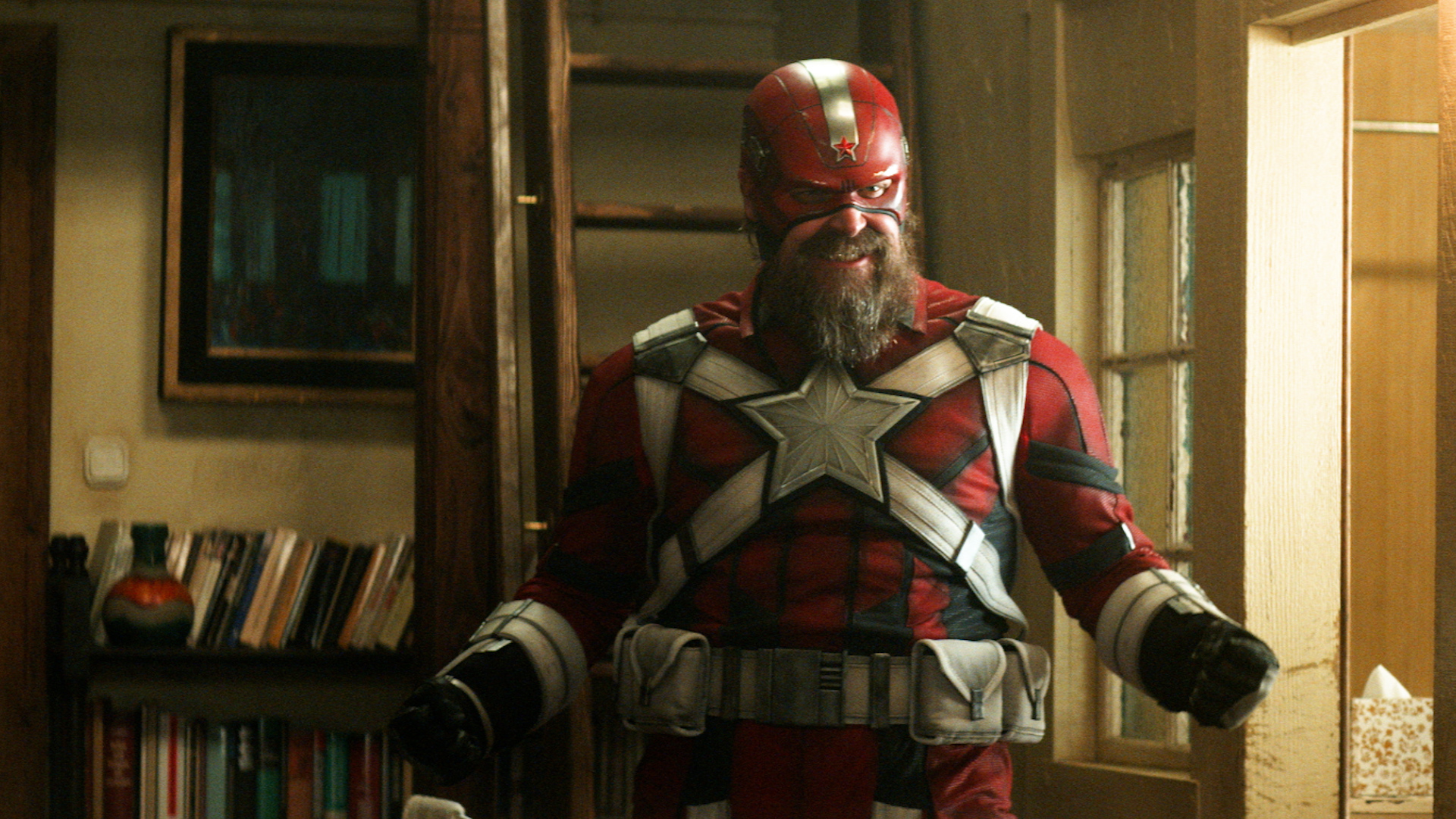
Alexei Shostakov has been living inside a delusion for decades, and Harbour plays every beat with perfect comic timing and an unexpected undercurrent of genuine sadness. The Red Guardian is a Soviet super-soldier who hasn’t been relevant since the Cold War, squeezed into a uniform that no longer fits, still telling stories about fighting Captain America that nobody believes. Harbour is hilarious in the role; there’s a prison scene where Alexei flexes for fellow inmates while discussing his legacy that ranks among the funniest moments in any MCU film. The scenes with Florence Pugh are where the performance gets interesting, because Harbour finds the real hurt beneath the bluster: a man who failed his family and can’t quite bring himself to admit it. He walked away as the most talked-about part of the film.
1. Violent Night (2022)
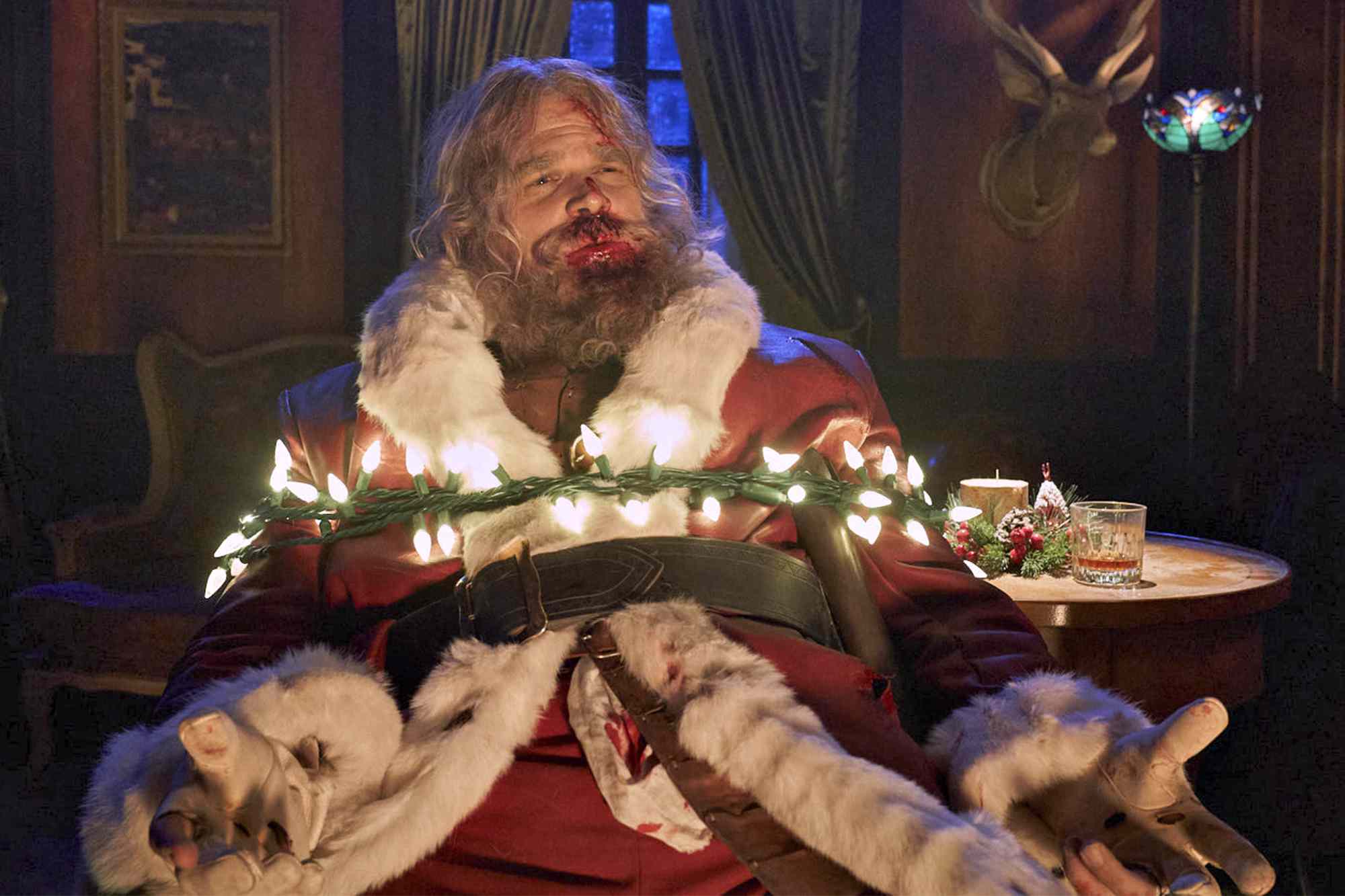
This is the movie that settled what David Harbour could do when a film was built entirely around him. Santa Claus, as played here, is a whiskey-soaked, disillusioned Viking berserker who has spent centuries watching humanity get worse and mostly stopped caring, until one Christmas Eve forces him to remember why he started. Harbour commits to every register the film demands: the physical comedy of a large man in a red suit dispatching mercenaries with a hammer, the genuine pathos of Santa explaining to a little girl what it feels like to lose faith in people, and a roaring operatic climax that earns its payoff because he has done the character work to get there. Tommy Wirkola’s film became an instant cult holiday classic, the kind people rewatch every December and quote at each other. It proved Harbour could carry a film on pure charisma and physical commitment, and the moment that sticks is the quiet one — Harbour’s voice dropping almost to nothing as Santa admits he kept going because of kids like her, making you feel the full weight of a thousand years of disappointment lifting in real time.

Written by Miranda Davies
Film & TV Enthusiast
Hi, my name is Miranda Davies, and I’ve loved film and television all of my life. Some of my earliest memories involve me and family or friends catching the latest movies, or reclining on the couch to catch some awesome television, and I want to share that passion with fellow fans like you! The best way to celebrate film and television is to chat about it with people as equally passionate as you, so this website will be dedicated to being a hub for those that want to chat about their obsessions in a safe and welcoming environment that is fun to visit!
More about the author